Concept

The agentic data steward, explained for small business

A concept, not a delivered project: what Google's data platform lead means when he says human data stewardship cannot scale, and what the same argument looks like inside a 10-person company that never had a data steward to begin with.

Field: data quality, small business · Location: Sweden and UAE · Type: audit-first data service · Status: concept

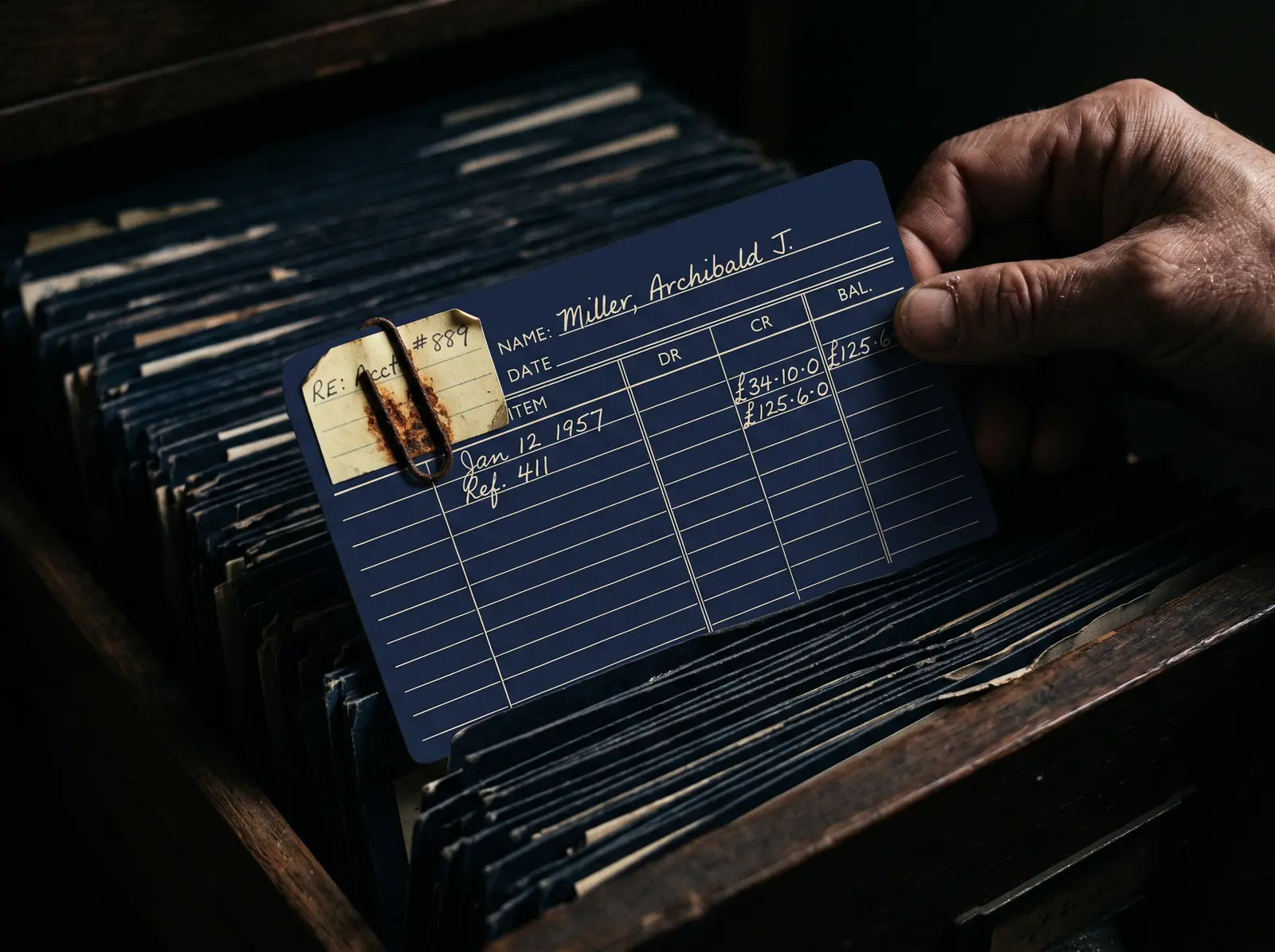
Still life: a single navy ledger card lifted from a disordered stack of identical cards, held by a rusted paperclip
01

"You just could not throw enough human bodies on the problem"

On 22 July 2026, Andi Gutmans, Vice President and General Manager for Data Cloud at Google Cloud, sat down with host Cindi Howson on ThoughtSpot's podcast The Data and AI Chief and wrote off the way his own industry has done data quality. Pressed on what to do about a document estate full of near-identical copies, he answered: "I always say that, you know, the old way of doing this failed because you needed data stewards who would basically curate data, make sure, check on data quality, catalog the data... You just could not throw enough human bodies on the problem, right, to get through the whole data estate." (Episode 141, at 00:12:17.)

The prescription arrives in the same breath: "we can't solve this with humans... We actually have to build agents that automatically do that for you." He has been making the argument all summer. In June he told Computer Weekly that "We are at too high a scale, and the customers are getting to too high a scale, to just throw more data stewards onto the problem," and put a number on it for Capacity: "Manually curating 20,000 tables, you just can't hire enough data stewards to do that."

The rest of the industry has already priced the admission in. Actian shipped a product called an Agentic Data Steward in June 2026. Fivetran and dbt Labs closed their merger the same month and described the point of it as the data infrastructure for trusted AI agents. When the companies that sold you stewardship tooling start selling the automation of stewardship, the confession is structural, not a slip of the tongue.

Worth the 39 minutes if this is your world: the episode lives on the ThoughtSpot episode page, on Spotify, on Apple Podcasts and on YouTube.
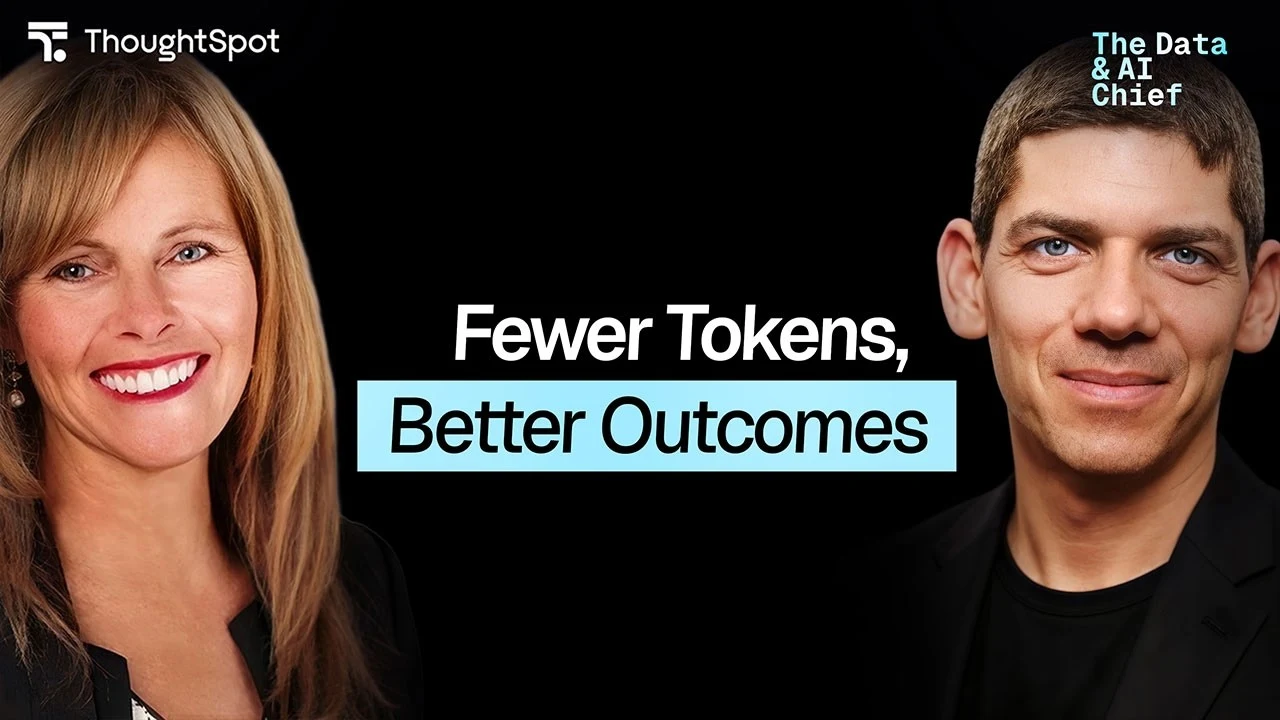
How Google is building enterprise trust in agentic AI

The Data and AI Chief, episode 141 · 39 minutes

Nothing loads from Spotify until you press play.

02

The tooling was never the problem. The staffing was.

Deepnode has an unusual reason to agree with him. For three years the person behind this business was the resident Informatica Data Quality expert in a large organisation, running the platform on-premise as a full-time job: profiling, rules, match and merge, exception queues, the lot. The software was excellent and expensive, and it did what it promised.

It still lost. Not because the rules were wrong, but because every new source system, every renamed field and every merged supplier list added work to a queue that exactly one person could clear. Curation grows with headcount. Data does not. That is Gutmans's diagnosis, and it looks the same from inside the job as it does from a Google keynote.

Now shrink the same disease. A 10-person company has no steward, no profiling tool and no rules engine. Its customer list is spread across a phone's contacts, an invoicing tool and a WhatsApp thread, and its addresses live in the heads of whoever drove there last. The data is not just incomplete. It is unowned: nobody in the business feels responsible for it, because nobody is paid to care.

The failures are specific, and three of them already have their own pages here: the customer record nobody owns, the address reinvented every day, and the shelf nobody cross-checks. An enterprise answers this by hiring a team. A small business absorbs it as the cost of doing business, mostly because every tool built for the enterprise version was priced and scoped for the enterprise.

03

An audit first, then repairs you approve one by one

01

A data health report before anything is touched

A read-only pass over the systems that actually matter: customers, addresses, inventory, invoices. It comes back as a plain report. How many customers exist twice, which addresses contradict each other, which records have no usable contact detail, and where that costs the business time every week. Fixed scope, nothing written, nothing deleted.

02

Repairs proposed at a confidence threshold, never applied silently

The mechanism is Gutmans's own: "if there's a certain confidence level, then automatically populate the knowledge. If the confidence level may not be as high, have a human in the loop take a look at it." (00:14:10.) At small-business scale we set that threshold deliberately low on autonomy: the agent proposes, the owner approves in a short queue, and anything ambiguous waits.

03

One record per customer instead of one per channel

Fragments from chat, phone, email and invoices are matched into a single record. Conflicts are flagged rather than guessed. Originals are kept untouched, so any correction can be traced back to what the source actually said.

04

A standing check, not a one-off cleanup

The pass runs again on a schedule and surfaces a short list of records that have started to look wrong. Nothing new to log into daily, no dashboard to maintain, no subscription to a platform the business will never fill.

Also in the box the audit is deliverable one and it stands on its own. If it comes back saying the records are in decent shape, that is a real outcome and the engagement ends there. A free scoping call, then a fixed price for every step, so you always know the cost before you commit.

04

The steward does not disappear. The archaeology does.

The most useful line in the episode for anyone selling this is the one that limits it. Gutmans does not abolish the human role, he adds a second one beside it: "we're thinking of two key personas. One is the data steward that ultimately, you know, kind of has to make sure that the knowledge, right, is appropriate for the organization... And then the second one is, I actually call it the agent persona." (00:14:10.)

In a small business, the steward persona is the owner, and the job is unpaid and squeezed between everything else. So the division of labour has to be explicit: the agent does the digging through old chats and duplicate rows, and a person makes every call that reaches a customer. No message sent, no record merged, no address overwritten without approval. When two sources disagree, the system says so instead of picking a winner.

The caveat comes from the same interview, which is what makes it usable: "So this will be a journey. It's, it's extremely complex. Anyone who tells you they completely solved it is not telling you the truth." That sentence is a good test to hold against any vendor, including this one.

05

What changes is narrow, and the big claim is still unproven

What changes is worth having and easy to state. The business finds out what condition its records are in, receives a queue of proposed repairs instead of a six-month project, and stops rediscovering the same customer, the same address and the same stock gap every month.

What has not been demonstrated is the grand version of the claim. Trust in business data is falling rather than rising: in a Salesforce survey of 552 business leaders reported by Forbes in April 2025, 36 percent said they believed their data was accurate, down from 49 percent two years earlier. Barr Moses of Monte Carlo, writing in January 2026, cites an MIT report finding that 95 percent of generative AI pilots showed no measurable profit impact in 2025.

That gap is exactly why the first deliverable here is an audit and not a platform. An audit is falsifiable: you can read it, argue with it, and check it against your own books by lunchtime. A platform is a monthly charge that hopes you never get around to it.

07

The enterprise version costs a salary. This one should not.

Google is building agentic stewardship for organisations with 20,000 tables and a governance department. The argument holds with more force, not less, for a business with four thousand customer records and nobody looking after them. Start with the audit, find out what is actually broken, and decide from there.

Book a free scoping call